 Ali Rıza Akın
Today, the medical world defines the human body not just as flesh and bone, but as a shared "super organism" inhabited by trillions of microorganisms. The two main protagonists of this coexistence, the microbiota and the microbiome, are actually the management center of our health. To summarize briefly; microbiota describes "who lives there," while microbiome explains "what those living there are capable of doing."
Understanding this difference can help us grasp why some supplements do not yield the same results in every body or why nutritional plans need to be personalized. Because it is not just about the number of bacteria inside, but about how the genetic abilities of those bacteria interact with your body.
What is Microbiota: The Community of Living Beings in Our Body
Microbiota is the name given to the community of living organisms—bacteria, viruses, fungi, and archaea—colonizing a specific region of our body (such as the gut, skin, mouth, etc.). The most densely populated microbiota area today is our gut, which hosts trillions of microorganisms.
- A Concrete Community: When we say microbiota, we refer to the "population" inside. How many types of bacteria are there? Which species are dominant? The answers to these questions define the microbiota.
- It Begins at Birth: The microbiota starts to form from the moment we open our eyes to the world and evolves throughout life with nutrition, stress, and environmental factors. (Hill C. et al., 2014)
What is Microbiome: A Genetic Treasure and Functional Capacity
The microbiome, on the other hand, is a much broader and more inclusive term. It refers to all the genes possessed by all microorganisms within the microbiota, their environmental interactions, and the compounds they produce.
- A Genetic Catalog: The number of microbial genes in our body is hundreds of times greater than the number of our own human genes. This vast genetic library is what we call the microbiome.
- Represents Abilities: The microbiome describes what these organisms can produce (vitamins, short-chain fatty acids, etc.) and how they participate in the body's metabolic processes. (Ursell L.K. et al., 2012)
How Should We Understand the Fundamental Differences?
To better grasp the differences between microbiota and microbiome, it may be helpful to look at the following basic comparisons:
|
Feature |
Microbiota |
Microbiome |
|
Definition |
The community of living microorganisms inhabiting a specific area. |
Microorganisms, their genes, and environmental interactions. |
|
Focus Point |
Species diversity and population (Who is there?). |
Genetic potential and function (What can they do?). |
|
Scope |
Covers only living organisms. |
Also includes genetic material, proteins, and metabolites. |
|
Analysis Method |
Usually involves species-based counting and identification. |
Gene mapping is performed through metagenomic analyses. |
Roles of Microbiota and Microbiome on the Body
These two structures in our gut can support systemic well-being by working in harmony:
- Digestive Flexibility: Members of the microbiota (living beings) use the genetic codes in the microbiome to break down fibers that we cannot digest. The postbiotic components produced in this process can provide energy to our cells.
- Immune Balance: The microbiome acts like a genetic guide that teaches our immune system when to respond. In this way, the body can increase its capacity to distinguish between friend and foe. (Belkaid Y. & Hand T.W., 2014)
- Barrier Protection: The genetic mechanisms that protect the "armor" on the gut surface are directly related to the microbiome being active and balanced.
Ways to Support Microbiome and Microbiota Health
The processed foods and high stress brought by modern life that we are exposed to today can disrupt this delicate balance (dysbiosis). To protect both the living community (microbiota) and support genetic capacity (microbiome), a holistic approach should be preferred:
- Diverse Nutrition: A vegetable-based and polyphenol-rich (such as pomegranate, grape seed, green tea) diet can help increase the functional capacity of the microbiome.
- Fibrous Foods: Fibers are the most important fuel for members of the microbiota. Feeding them properly can encourage the production of beneficial genetic outputs (postbiotics).
- Next Generation Solutions: Supplements that go beyond traditional approaches can help maintain the internal balance.
Next Generation Solutions and the Next Microbiome Approach
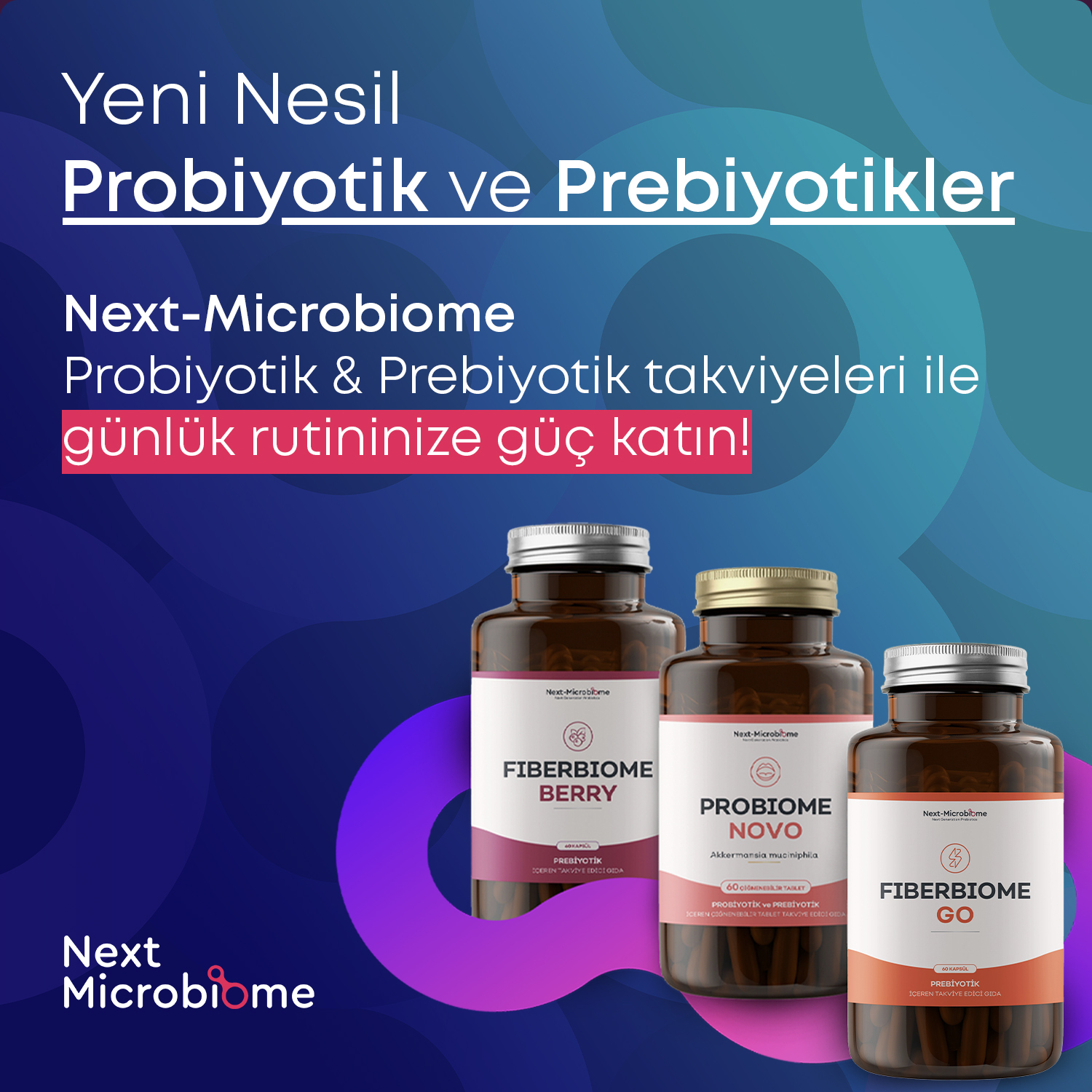
On the journey to gut health, simply increasing the number of living organisms inside may not always be enough. What matters is supporting the genetic dialogue those organisms have with the body, that is, the microbiome. Next Microbiome, shaped by the vision of Ali Rıza Akın, offers scientific formulas that touch every layer of this complex system.
Microbiota Management Tailored to Needs
Since each individual's microbiome map is unique, the solutions offered should also take this diversity into account:
- Holistic Balance: Multi-layered formulations designed to maintain the overall well-being of the microbiome can help increase the resilience of the ecosystem.
- Barrier and Metabolism Support: Special strains that protect the health of the gut wall and ingredients compatible with metabolic processes can help establish systemic balance.
- Postbiotic-Effective Formulas: Approaches that directly or indirectly support the beneficial components produced by live bacteria can help the body benefit from these processes more quickly.
- Gut-Brain Axis-Focused Approaches: Special ingredients that support communication with the nervous system aim to create positive effects on mental clarity and mood.
A Holistic Perspective: Ali Rıza Akın and Next Microbiome
The key to a healthy life lies in understanding this silent and powerful legacy of our body. Ali Rıza Akın defines the microbiome and microbiota as the "inner compass of our health." When this compass points in the right direction, all other systems of the body can work in harmony.
The solutions developed within Next Microbiome aim to guide individuals in supporting their own internal ecosystems on a scientific basis. Each approach is a solution partner that accompanies the body's natural repair mechanisms while preserving microbial genetic diversity.
In conclusion; the care you show to this vast world in your gut may be the key to a more energetic and balanced life in the long term. Today's scientific facts show that combining the potential offered by the microbiome with the right strategies is the most conscious step for sustainable health.
Remember; since each individual's biological structure is unique, it is always healthiest to consult a healthcare professional to create the most suitable plan for your current situation before starting a new supplement program or dietary regimen.
Scientific References
- Hill, C., et al. (2014). Expert consensus document: The International Scientific Association for Probiotics and Prebiotics (ISAPP) consensus statement on the term probiotic. Nature Reviews Gastroenterology & Hepatology.https://doi.org/10.1038/nrgastro.2014.66
- Ursell, L. K., et al. (2012). Defining the human microbiome. Nutrition Reviews.https://doi.org/10.1016/j.nut.2012.03.014
- Belkaid, Y., & Hand, T. W. (2014). Role of the microbiota in immunity and inflammation. Science.https://doi.org/10.1126/science.1251034
- Lloyd-Price, J., et al. (2016). The healthy human microbiome. Genome Biology. https://doi.org/10.1186/s13059-016-1035-9
- Cryan, J. F., & Dinan, T. G. (2012). Mind-altering microorganisms: the impact of the gut microbiota on brain and behaviour. Nature Reviews Neuroscience. https://doi.org/10.1038/nrn3346