 Ali Rıza Akın
Akkermansia muciniphila is a type of bacteria that lives in the protective mucus layer (mucin) of the human gut and develops in an oxygen-free environment. Its most fundamental feature that distinguishes it from classic probiotics is its use of the mucin layer, which directly covers the intestinal wall, as a food source. It ensures the constant renewal and freshness of the intestinal wall. (Derrien M. et al., 2004)
What Is Akkermansia Muciniphila Good For?
The effects of this friendly bacterium on the body are not limited to a single area. Research suggests that the presence of this bacterium acts as a versatile "guardian" for overall well-being:
- Barrier Integrity: It is thought to have a strengthening effect on "tight junctions" that control the passage between intestinal cells. This may help prevent conditions such as leaky gut.
- Immune Modulation: It is in constant dialogue with immune cells and may help keep the body's defense mechanisms balanced without overreacting (inflammation).
- Energy Balance: By playing a regulatory role in glucose and fat metabolism processes, it may support the body in optimizing energy use. (Everard A. et al., 2013)
How Does Akkermansia Muciniphila Work?
Akkermansia's working principle is based on "dynamic renewal." While breaking down intestinal mucus, it produces short-chain fatty acids (SCFA) such as acetate and propionate. These substances are both an energy source for intestinal cells and create a foundation that promotes the growth of other beneficial bacteria. This cross-feeding mechanism plays a key role in maintaining microbiota diversity. (Belzer C. & de Vos W.M., 2012)
Where Is Akkermansia Muciniphila Found?
One of the most frequently asked questions is in which foods this bacterium is found. It is important to note that Akkermansia muciniphila is not naturally present in classic fermented foods (yogurt, cheese, etc.). It is an innate resident of the gut. However, the following foods that create a "prebiotic effect" may help increase its population in the gut:
- Polyphenol Sources: Foods rich in polyphenols such as pomegranate, blueberry, grape seed, and green tea are thought to help increase Akkermansia levels.
- Fish Oil (Omega-3): Some studies show that healthy fatty acids support the colonization of this bacterium. (Anhe F.F. et al., 2015)
What Are Supplements Containing Akkermansia Muciniphila?
With advances in technology today, new generation supplements containing this bacterium have been developed. In the past, it was very difficult to keep this bacterium alive, but now it can be offered with special drying and encapsulation technologies.
- Supplement Selection: It is recommended to choose reliable supplements with a scientific background and containing the correct strains.
Does Akkermansia Muciniphila Help with Weight Management?
The area where Akkermansia excites the scientific world the most is metabolic health. Research has shown an inverse relationship between the levels of this bacterium and healthy body composition. In other words, it has been observed that this bacterium is more abundant in individuals with a healthy and balanced body structure.
The potential positive effects of the bacterium on insulin sensitivity and energy expenditure suggest that it may be a supportive factor in weight management processes. However, this should not be considered a "weight loss solution" on its own, but rather as part of a healthy metabolism. (Dao M.C. et al., 2016)
What Does Akkermansia Deficiency in the Microbiota Mean?
A decrease in this bacterium in the gut microbiota is generally associated with weakening of the intestinal barrier and low-grade inflammation. Stress, processed foods, and inactivity brought about by modern life can disrupt this balance. Therefore, maintaining microbiota diversity is critically important not only for the digestive system but for the health of the entire body. (Naito Y. et al., 2018)
Future Health Vision: Holistic Approach and Personalized Solutions
The journey to improve our gut health begins not only by alleviating symptoms but by fundamentally understanding this unique natural ecosystem of our body. At this point, Ali Rıza Akın's many years of experience and scientific vision in the field of microbiota guide the "smart" supplement solutions that modern people need. Akın's core philosophy is that gut health is not a static state, but a dynamic process that must be continuously nourished by nutrition, stress management, and the right biotic support.
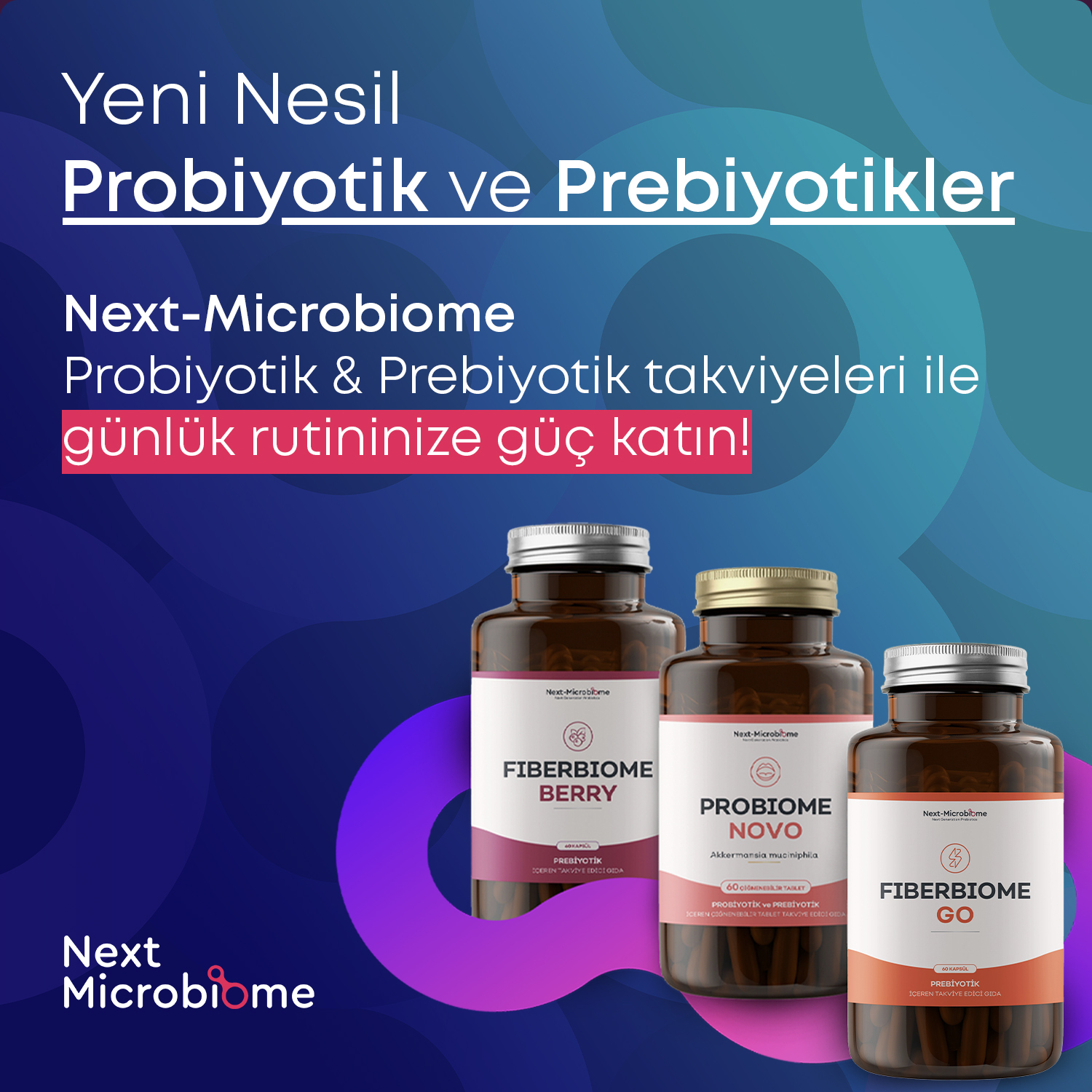
Projects developed under the roof of Next Microbiome are a reflection of this vision and aim to increase individuals' quality of life with scientific evidence. The most current and comprehensive representative of this vision is Probiome-Novo, which stands out with its new generation content.
Probiome-Novo: A New Page in the Microbiome
Probiome-Novo, which brings together ingredients accepted as the "gold standard" in the microbiota world, has a formulation that goes beyond ordinary probiotics. The strains and supportive components it contains are designed to target the most critical players of the gut ecosystem.
- Akkermansia-Focused Support: Probiome-Novo offers a synergy that especially supports the natural colonization of bacteria such as Akkermansia muciniphila, the guardian of the gut barrier.
- Multi-Layered Formulation: The product not only provides live bacterial support; it also promotes the prebiotic foundation needed for these bacteria to survive and the formation of postbiotic metabolites that can create a rapid response in the body.
- Holistic Benefit: It helps the body find its natural balance in a wide spectrum from digestive comfort to immune modulation. (Hill C. et al., 2014)
Sustainable Health with Expert Guidance
As Ali Rıza Akın emphasizes at every opportunity; each individual's microbiota structure is as unique and personal as a fingerprint. Probiome-Novo, developed to provide the most suitable support for this unique structure, aims to activate the body's own healing mechanisms in the light of scientific data.
Remember; before starting a new supplement program, consulting a health professional to create the most suitable plan for your current health status and microbiota profile is the right step for a sustainable and conscious health journey.
Scientific References
Derrien, M., et al. (2004). Akkermansia muciniphila gen. nov., sp. nov., a mucin-degrading bacterium from the human intestine. International Journal of Systematic and Evolutionary Microbiology. https://doi.org/10.1099/ijs.0.02873-0
Everard, A., et al. (2013). Cross-talk between Akkermansia muciniphila and intestinal epithelium controls diet-induced obesity. Proceedings of the National Academy of Sciences (PNAS).https://doi.org/10.1073/pnas.1219451110
Belzer, C., & de Vos, W. M. (2012). Microbes inside—From diversity to function: the case of Akkermansia. The ISME Journal.https://doi.org/10.1038/ismej.2012.6
Anhe, F. F., et al. (2015). A polyphenol-rich cranberry extract protects from diet-induced obesity, insulin resistance and intestinal inflammation in association with increased Akkermansia muciniphila population in the gut microbiota. Gut Journal.https://doi.org/10.1136/gutjnl-2014-307234
Depommier, C., et al. (2019). Supplementation with Akkermansia muciniphila in overweight and obese human volunteers: a proof-of-concept exploratory study. Nature Medicine. https://doi.org/10.1038/s41591-019-0495-2
Dao, M. C., et al. (2016). Akkermansia muciniphila and improved metabolic health during dietary interventions in obesity. Gut Journal. https://doi.org/10.1136/gutjnl-2014-308778
Naito, Y., et al. (2018). A next-generation beneficial microbe: Akkermansia muciniphila. Journal of Clinical Biochemistry and Nutrition. https://doi.org/10.3164/jcbn.18-71
Hill, C., et al. (2014). The International Scientific Association for Probiotics and Prebiotics consensus statement on the scope and appropriate use of the term probiotic. Nature Reviews Gastroenterology & Hepatology.https://doi.org/10.1038/nrgastro.2014.66