 Ali Rıza Akın
One of the most talked-about topics in the world of biology in recent years, GLP-1 (Glucagon-Like Peptide-1) is a vital hormone secreted from the intestines, which serve as the hidden control center of our metabolism. The nutritional irregularities and weight management challenges brought by modern life push us to get to know this natural signaling mechanism of our body more closely. We now know that health is not just about counting calories; it is the flawless harmony between our internal hormonal balance and microbial diversity.
The scientific world, which approaches gut health as a holistic balance story, has discovered the fascinating connection between this hormone and Akkermansia muciniphila, which is especially defined as a "next-generation bacterium." In this guide, we will examine the world of GLP-1, which plays a key role in many areas from appetite control to cellular energy balance, and its strategic relationship with the microbiota in the light of scientific data.
What is GLP-1 and What Does It Do?
GLP-1 is an incretin hormone produced by the "L cells" of the intestines and released into the bloodstream in response to food intake. Its main function is to synchronize the body's energy use and prevent the system from being overloaded after nutrient intake. This molecule, which operates in a wide communication network from the digestive system to the brain, is considered one of the most important regulators of metabolic health.
Today, the functions of GLP-1 are not limited to blood sugar management; it also determines how efficiently cells use energy fuel and how quickly satiety signals reach the brain. In this respect, the hormone is one of the most strategic biological tools produced by the body to maintain its own internal balance.
Scientific Source: Holst, J. J. (2007). Physiology of Glucagon-Like Peptide-1. Physiological Reviews. https://doi.org/10.1152/physrev.00034.2006
How Does the GLP-1 Hormone Work in the Body?
The working mechanism of this hormone is based on perfect biological timing. The moment we start eating, sensitive cells in the intestinal wall are stimulated and GLP-1 secretion begins. This secretion triggers a multi-faceted "preparation" phase in the body:
- Pancreas Interaction: It helps balance blood sugar by increasing insulin production in a glucose-sensitive manner.
- Gastric Emptying Rate: It slows down the rate at which the stomach empties its contents into the intestines. In this way, nutrients are absorbed over a longer period and sudden fluctuations in blood sugar are prevented.
- Liver Support: It suppresses the liver's production of excess sugar, ensuring the system remains stabilized.
This multi-layered working principle aims to protect the body's energy stores while also preventing systemic wear and tear.
Scientific Source: Müller, T. D., et al. (2019). Glucagon-Like Peptide 1 (GLP-1). Molecular Metabolism. https://doi.org/10.1016/j.molmet.2019.09.010
The Effect of GLP-1 on Satiety and Appetite
One of the most remarkable features of GLP-1 is its direct connection with the hypothalamus region in the brain. This is the body's center for hunger and satiety. When the hormone reaches this region, it transmits the message "energy stores are full," naturally accompanying a decrease in the desire to eat.
This process brings not only a physical feeling of fullness but also a sense of mental satisfaction. The peaceful feeling of satiety experienced after eating is largely related to GLP-1 activating receptors in the brain. This signaling mechanism, combined with the slow emptying of the stomach, can naturally prolong the intervals between meals and eliminate the need for unnecessary snacking.
Scientific Source: Shah, M., & Vella, A. (2014). Effects and Therapeutic Use of Incretins. Endocrinology and Metabolism Clinics. https://doi.org/10.1016/j.ecl.2014.04.001
What Are GLP-1 Receptor Agonists?
After discovering this natural power of the body, the scientific world developed synthetic compounds that mimic the effect of GLP-1. These are called "GLP-1 receptor agonists." These molecules intervene in metabolic processes by either prolonging the lifespan of the body's own hormone or stimulating the receptors more strongly.
However, there is an important distinction here: While synthetic interventions provide external support, the main goal should be to optimize the body's own natural GLP-1 production capacity. Approaches that support natural secretion aim to provide sustainable well-being without disrupting the biological rhythm of the system.
Scientific Source: Drucker, D. J. (2018). Mechanisms of GLP-1 Receptor Agonists. Cell Metabolism. https://doi.org/10.1016/j.cmet.2018.03.001
Akkermansia muciniphila: The Microbial Trigger of GLP-1
One of the most striking scientific findings of recent years is that a special bacterium living in our intestines can directly increase GLP-1 secretion: Akkermansia muciniphila. This bacterium resides in the protective mucus layer of the intestines and keeps the system fresh by constantly renewing this layer.
Research shows that the presence of Akkermansia stimulates L cells in the intestines to trigger GLP-1 production. This microbial interaction allows the body to balance appetite and blood sugar using its own internal resources. In other words, the healthier your population of Akkermansia in your gut, the stronger your metabolism's "satiety signals" can function.
Scientific Source: Depommier, C., et al. (2019). A study on Akkermansia muciniphila supplementation in volunteers. Nature Medicine. https://doi.org/10.1038/s41591-019-0495-2
Increasing GLP-1 Levels Naturally
Supporting the body's own GLP-1 production actually starts with properly nourishing the microbiota. Instead of external interventions, adopting strategies that will revitalize the internal ecosystem can offer more permanent results:
- Strategic Fiber Consumption: The short-chain fatty acids (especially propionate) produced when friendly bacteria in the intestines ferment fibers are the most powerful natural elements that trigger GLP-1 secretion.
- Polyphenol Support: Foods rich in polyphenols such as green tea, grape seed, and pomegranate are predicted to support the increase of Akkermansia and indirectly raise hormone levels.
- Regular Physical Activity: It is known that physical activity has positive effects on gut motility and hormonal sensitivity.
While microbiome studies are experiencing a paradigm shift on a global scale, Ali Rıza Akın, who represents Turkey internationally with his research in this field, positions the GLP-1 mechanism at the center of gut health. According to Akın, the key to metabolic well-being is not to load hormones into the system from outside, but to mobilize the intestinal cells, which are the body's own production facilities, with the right microbial allies.
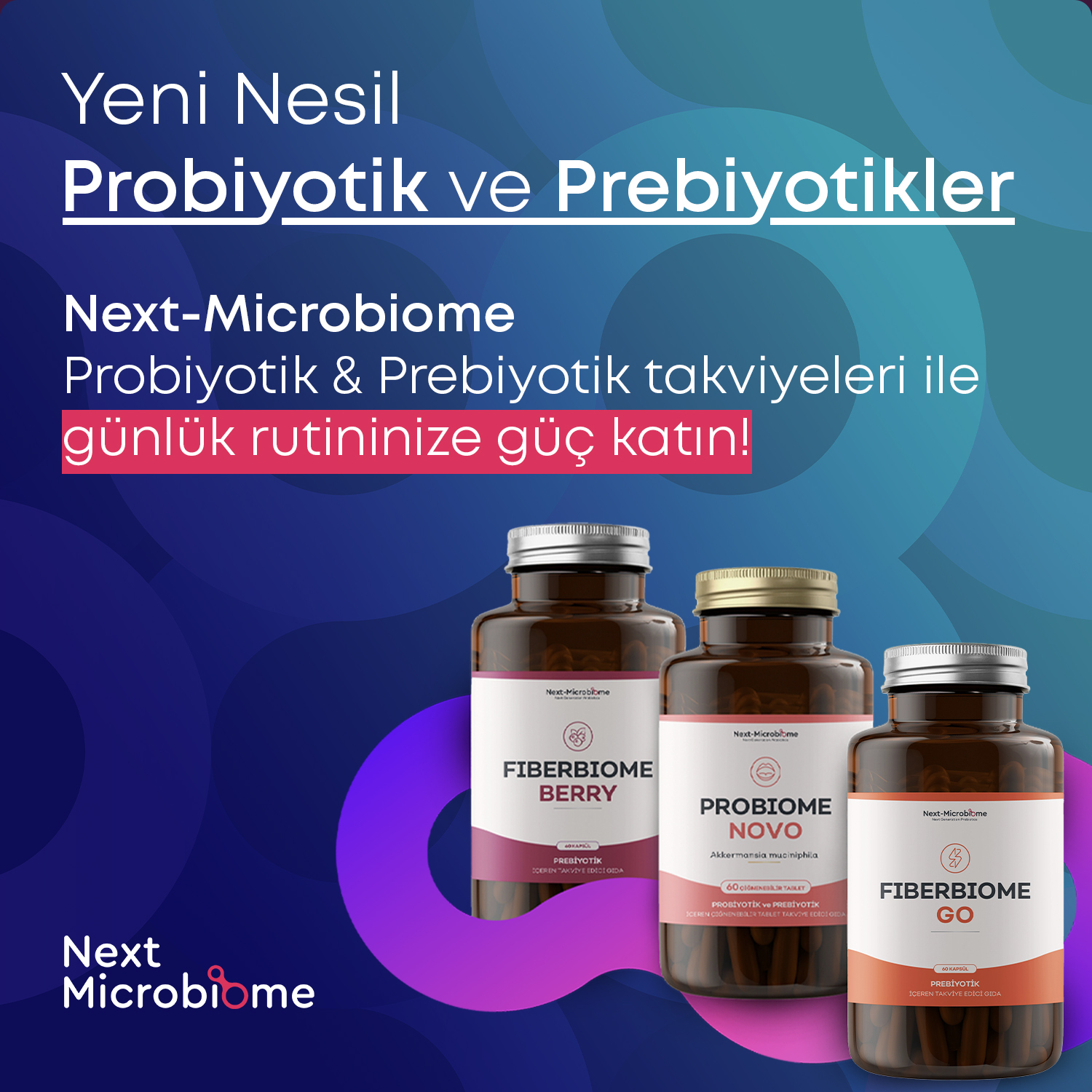
Next Microbiome's flagship product, Probiome-NOVO, stands out as a true "gut architect" shaped by Ali Rıza Akın's patented technologies. This formulation not only nourishes the Akkermansia bacterium; it also optimizes the renewal cycle of the intestinal mucus layer, providing a biological solution to complex problems such as leaky gut syndrome, insulin resistance, and chronic inflammation. A similar formula, which has made a splash in the US market under the name Boost Synergy GLP-1, opens a new chapter in weight management and diabetes control by triggering the body's natural GLP-1 hormone secretion.
These solutions, brought to life with Akın's "Live As Long As Your Bacteria" philosophy, are far from random ingredients; they are the product of a discipline fully validated by clinical data. Thanks to the developed SIMS model, the effect of each formula on the intestinal wall is pre-tested, and its efficacy is scientifically guaranteed.
Why Does Next Microbiome Make a Difference?
Combining global standards in health technologies with local production power, Next Microbiome stands out with the following core pillars:
- Local Power, Global Vision: High biotechnological solutions developed in Turkey are offered at standards that compete internationally.
- Personalized Microbiota Approach: Instead of probiotics obtained from classic fermented products, modern solutions are produced focusing on the individual's gut type and specific needs.
- Future-Oriented Health Investment: By targeting "keystone" bacteria like Akkermansia, the aim is long-term and permanent health gains instead of temporary relief.
Instead of leaving your health to chance or the limited effects of traditional methods, trust this holistic approach shaped by scientific data. Ali Rıza Akın and Next Microbiome are preparing your gut for the health standards of the future. This biological revolution, which starts with a single bacterium, has the potential to transform your entire quality of life. Start discovering your inner ecosystem and building your future with Next Microbiome today!
Disclaimer: This information is for educational purposes only and should not be considered medical advice. Consult a healthcare professional for personalized guidance on the subject.
San Francisco, California, USA
Ali Rıza AKIN