 Ali Rıza Akın
Today, our perspective on health is fundamentally changing as we realize that our bodies are not made up solely of our own cells. In this era, the microbiome, one of the most exciting discoveries in the scientific world, is defined as a vast genetic treasure residing within our bodies. Understanding this invisible architecture of our health is considered one of the most strategic steps to take in preserving our overall well-being.
Ali Rıza Akın and the Next Microbiome team, who view gut health not as a static state but as a dynamic ecosystem that needs constant nourishment, help to decode the secrets of this complex system with their microbiome-focused approaches.
What is the Microbiome? The Story of a Genetic Heritage
Microbiome refers to all the genetic material possessed by the microorganisms (microbiota) living in our bodies. While microbiota is the "community of living beings" residing there, the microbiome encompasses all the "genetic capabilities" of these organisms. Interestingly, the number of microbial genes in our bodies is hundreds of times greater than the number of our own human genes.
This immense genetic diversity allows our bodies to perform many biochemical functions that they cannot accomplish on their own. Each individual's microbiome map is as unique as a fingerprint and is exclusive to that person. (Ursell L.K. et al., 2012)
What Does the Microbiome Do?
This genetic orchestra in our intestines acts almost like an auxiliary operating system for the body. Some of the main roles undertaken by the microbiome are as follows:
- Biochemical Factory Role: By fermenting fibers that the body's own enzymes cannot break down, it produces short-chain fatty acids and certain vitamins that are vital for cells.
- Trainer of the Immune System: The microbiome can function like a school that teaches immune cells which are "friends" and which are "threats," helping to keep the system balanced.
- Barrier Protection: By triggering genetic mechanisms that protect the intestinal surface, it can help form a shield against the passage of harmful components into the bloodstream. (Bäckhed F. et al., 2015)
What Are the Main Features of the Microbiome?
When defining a healthy microbiome structure, the following features stand out:
- Dynamic Structure: It is in a constant state of change and development along with dietary habits, sleep patterns, and environmental factors.
- Resilience: A highly diverse microbiome may have a faster recovery ability against external stress factors.
- Metabolic Flexibility: It is the capacity to process different food sources and produce the components the body needs. (Lozupone C.A. et al., 2012)
Benefits of the Microbiome on the Body
A balanced microbiome profile can support a systemic state of well-being beyond just digestive comfort:
- Metabolic Adaptation: By playing a regulatory role in blood sugar management and fat metabolism, it is predicted to contribute to maintaining a healthy body composition.
- Mental Well-being: Through continuous interaction with the nervous system via the gut-brain axis, it is thought to have positive effects on focus and mood.
- Inflammation Control: By helping to balance low-grade inflammation in the body, it can add positive value to overall quality of life. (Clemente J.C. et al., 2012)
Ways to Support the Microbiome and Next Microbiome Solutions
The fast pace of modern life can sometimes challenge this delicate genetic balance. A diet rich in polyphenols (such as pomegranate, green tea, prune) forms an important foundation for supporting your microbiome. However, since each individual's needs are different, Next Microbiome offers various formulations prepared in light of scientific data:
New Generation Product Groups in Microbiota Management
Taking personalized approaches on the journey to gut health plays a critical role in achieving targeted well-being. Developed with the vision of Ali Rıza Akın, these products aim to support different layers of the microbiome:
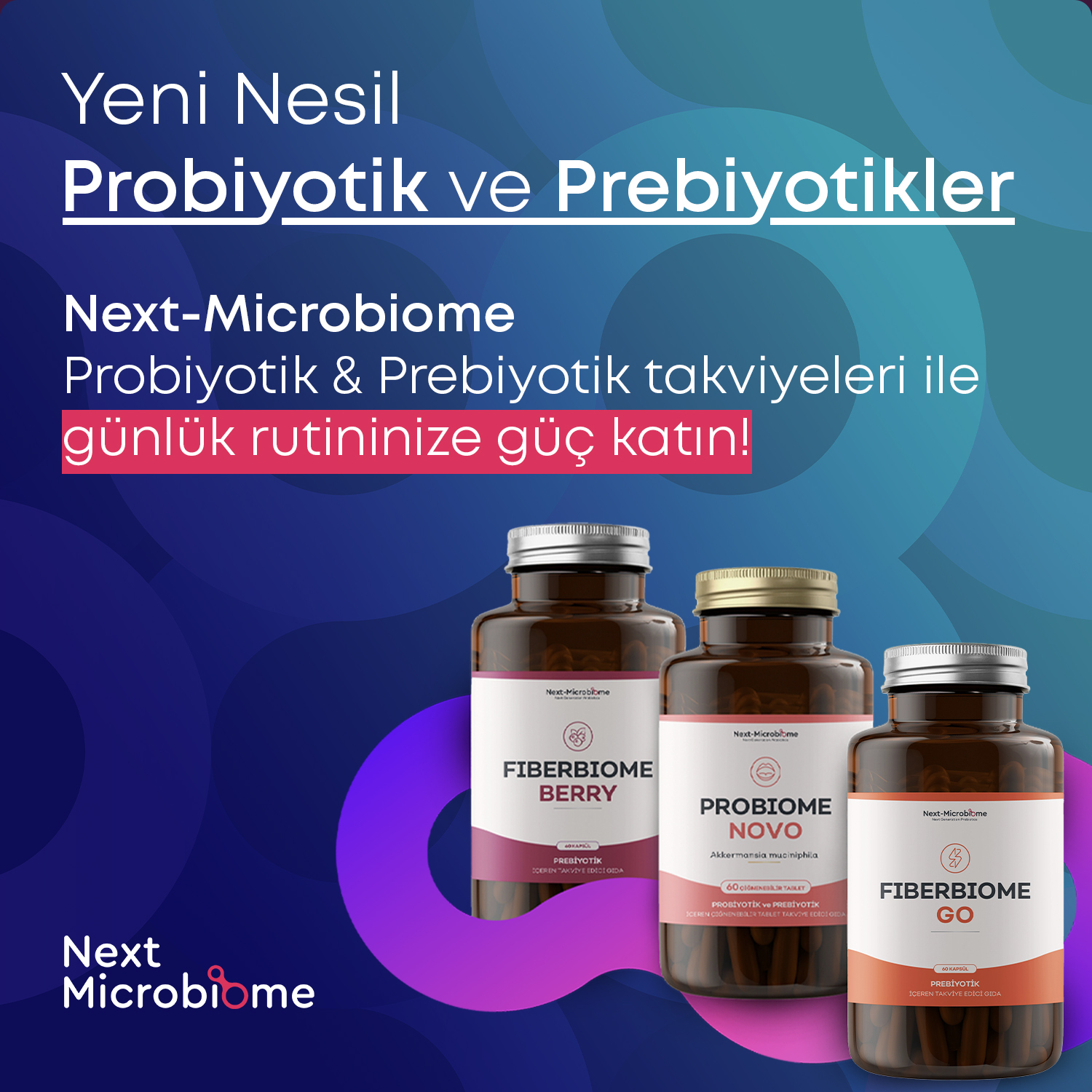
- Probiome-Novo: Designed to maintain microbiome balance and support overall gut health, it has a multi-layered and holistic formulation.
- Akkermansia-Focused Approaches: Contents are offered that support the natural colonization of special bacteria known as the guardians of the gut barrier and are compatible with metabolic processes.
- Metabolic and Immune Support Series: There are formulas containing strains that help modulate the body's defense mechanisms and special components that monitor metabolic rate and glucose balance.
- Cellular Renewal Formulations: Includes postbiotic-effective approaches that help protect the health of intestinal epithelial cells and promote the production of short-chain fatty acids.
- Cognitive and Mental Balance-Focused Strains: These are special probiotic contents aimed at contributing to mental clarity by supporting communication with the nervous system via the gut-brain axis.
- Women's Health and Hormonal Balance: These are series with special strain diversity optimized for the needs of the female body, focusing on the effect of the microbiome on hormonal processes.
Ali Rıza Akın and Next Microbiome
The journey to improving our gut health begins with understanding this silent and powerful genetic heritage of our bodies. Ali Rıza Akın defines the microbiome as the "inner compass of our health" because this system works in deep harmony with all other functions of the body.
The solutions developed with the vision of Next Microbiome aim to guide individuals to support their own bodies from within, based on scientific foundations. Each product is a solution partner designed to enhance quality of life. The ingredients used in the formulations accompany the body's natural repair mechanisms while preserving microbial genetic diversity.
In conclusion; the care you show to your microbiome can be the key to a more energetic and balanced life in the long term. In our current era, combining the genetic potential offered by the microbiome with the right supplementation and nutrition strategies is the most conscious approach for sustainable health.
Remember; since every individual's biological structure is unique, it is recommended to consult a healthcare professional to create the most suitable plan for your current situation and to select products before starting any supplementation program.
Scientific References
- Ursell, L. K., et al. (2012). Defining the human microbiome. Nutrition Reviews. https://doi.org/10.1016/j.nut.2012.03.014
- Bäckhed, F., et al. (2015). Dynamics and Stabilization of the Human Gut Microbiome during the First Year of Life.Cell Host & Microbe. https://doi.org/10.1016/j.cell.2015.04.012
- Lozupone, C. A., et al. (2012). Diversity, stability and resilience of the human gut microbiota. Nature. https://doi.org/10.1038/nature11550
- Clemente, J. C., et al. (2012). The Impact of the Gut Microbiota on Human Health: An Integrative View. Cell. https://doi.org/10.1016/j.cell.2012.01.035