 Ali Rıza Akın
Akkermansia muciniphila is a type of bacteria naturally residing in our intestines, which loves the intestinal mucus layer and settles there. Scientific studies show that this bacterium is found at higher levels in healthy, lean, and insulin-sensitive individuals; while it significantly decreases in conditions such as obesity and type 2 diabetes.
Therefore, Akkermansia has begun to be defined as "a key species associated with metabolic health" and has risen to the forefront among next-generation probiotic candidates.
Akkermansia muciniphila is a type of bacteria naturally residing in our intestines, which loves the intestinal mucus layer and settles there. Scientific studies show that this bacterium is found at higher levels in healthy, lean, and insulin-sensitive individuals; while it significantly decreases in conditions such as obesity and type 2 diabetes.
Therefore, Akkermansia has begun to be defined as "a key species associated with metabolic health" and has risen to the forefront among next-generation probiotic candidates.
https://www.frontiersin.org/journals/immunology/articles/10.3389/fimmu.2024.1370658
"In 2024, Huifang Niu and team's detailed analysis in the Frontiers in Immunology journal reveals how Akkermansia muciniphila bacteria soothes obesity-induced chronic inflammation: a complete immune hero. This gut-friendly bacterium reverses metabolic syndrome by curbing obesity, diabetes, and liver fat accumulation; particularly by suppressing low-grade inflammation and breaking insulin resistance.
How Does It Combat Inflammation?
Decreased Akkermansia in obese individuals cleanses LPS toxins and strengthens the intestinal barrier (with proteins like ZO-1, occludin); its supplementation in mice extinguishes fat tissue inflammation and accelerates mucus production. It provides the same effect whether live, pasteurized, or with outer membrane vesicles.
Contribution to Your Health
For those seeking Akkermansia muciniphila supplementation, an SEO-friendly tip: it forms a protective shield in NAFLD, CVD, and T2DM; multiply naturally with fiber-rich foods, polyphenols – slim your waistline, boost your energy."
Does Akkermansia Aid Weight Loss?
One of the most frequently asked questions is "Does Akkermansia aid weight loss?" The key point here is: Akkermansia alone is not a miraculous weight loss drug; however, it works as an important support mechanism in weight control.
In a clinical study conducted on overweight and metabolic syndrome individuals, a 3-month Akkermansia supplementation was reported to be associated with reductions in body weight, fat mass, and waist circumference. In the same study, it was reported that the pasteurized form of Akkermansia especially increased insulin sensitivity and improved the metabolic profile. Therefore, when accompanied by healthy eating and lifestyle changes, Akkermansia can provide significant contributions in terms of fat percentage and weight control.
https://gut.bmj.com/content/65/3/426
"In a study on obese individuals published in Gut journal in 2016, Maria Carlota Dao and team demonstrated that the abundance of Akkermansia muciniphila initially accelerated metabolic improvement with caloric restriction (CR). This bacterium plays a key role in managing obesity by correcting glucose homeostasis, blood lipids, and body composition – the best results were seen in Akkermansia-rich individuals post-diet."
How Does It Work?
A 6-week low-calorie diet was applied to 49 overweight/obese adults; those with high baseline Akkermansia experienced greater reductions in fasting glucose, triglycerides, and waist circumference, along with increased microbial diversity. The interaction between microbial richness and Akkermansia predicted the healthiest metabolic profile.
Effects on Obesity
Akkermansia reverses fat mass and glucose intolerance in humans as in mice; weight loss with CR leads to decreased inflammation and increased insulin sensitivity – highlighting its probiotic potential. Encourage this bacterium by enriching your diet."
Who Naturally Has More Akkermansia?
Scientific data shows that the level of Akkermansia varies significantly from person to person.
- It has been reported that the proportion of Akkermansia in the intestinal microbiota can reach approximately 1–5% in lean, metabolically healthy individuals without insulin resistance.
- In conditions such as obesity, insulin resistance, and type 2 diabetes, this proportion has been observed to drop below 0.5%.
Therefore, the level of Akkermansia is considered as a "biomarker" closely associated with metabolic health.
https://www.nature.com/articles/s41591-019-0495-2
"In a trial on obese individuals published in Nature Medicine in 2019, Clara Depommier and colleagues clearly demonstrated that Akkermansia muciniphila supplementation is a safe approach: zero side effects in individuals consuming 10 billion bacteria daily for 3 months. The pasteurized form especially shone; it reduced insulin resistance by 28%, lowered cholesterol, balanced liver values, and led to a few pounds of weight loss."
What Did the Trial Show?
In a 32-person placebo-controlled study, both live and pasteurized forms revitalized metabolism: decreased fasting insulin, extinguished inflammation, and reduced waist circumference. The pasteurized form proved more effective without disrupting the intestinal flora.
Contribution to Weight and Blood Sugar Balance
Akkermansia offers hope in combating obesity: it accelerates fat burning, corrects glucose utilization, and mitigates the risk of diabetes. Support it with fiber-rich foods, and witness changes in your body."
Which Foods Increase Akkermansia?
Akkermansia is not a standard bacterium found in direct food sources like yogurt, a classic probiotic; but it can naturally proliferate in the intestines with proper nutrition.
The main nutrition factors supporting Akkermansia can be summarized as follows:
- Polyphenol-rich red-purple fruits: Fruits such as pomegranate, blueberries, blackberries, and black grapes have been positively associated with Akkermansia.
- Prebiotic fiber sources: Vegetables containing inulin like chicory root, Jerusalem artichoke, asparagus, garlic, and leeks support both the mucus layer and Akkermansia.
- Omega-3 rich fatty fish: Fish like salmon, sardines, and mackerel improve the general microbiota balance, creating a favorable environment for Akkermansia.
- Green tea and plant antioxidants: With polyphenol and catechin content, they stimulate both Akkermansia and other beneficial bacteria.
- Low sugar and minimally processed foods: Reducing refined sugar and ultra-processed products is critical for intestinal barrier and Akkermansia density.
In short, a Mediterranean-style diet rich in colorful fruits and vegetables, high in fiber, and low in processed foods is the most "beloved" environment for Akkermansia.

How Does Akkermansia Benefit the Intestinal Barrier?
One of the best-known effects of Akkermansia is strengthening the intestinal barrier. Although it may seem initially negative that this bacterium consumes the mucus layer as a nutrient, it actually creates a controlled renewal cycle.
- While Akkermansia breaks down the mucus layer, it produces short-chain fatty acids; these serve as an energy source for intestinal cells.
- At the same time, it encourages goblet cells to produce more mucus; thus, the intestinal barrier functions as a constantly renewing "automatic defense line."
This mechanism plays a protective role against many problems associated with a weakened barrier, commonly referred to as "leaky gut."
https://link.springer.com/article/10.1186/s13099-024-00635-7
"In 2024, Chunyan Mo and colleagues detailed in the Gut Pathogens journal how Akkermansia muciniphila protects the intestinal wall. This bacterium provides a strong defense against obesity and metabolic disorders. By increasing mucus production, it reduces intestinal permeability and prevents chronic inflammation by blocking LPS toxins."
How Does the Intestinal Barrier Strengthen?
Akkermansia muciniphila thickens the MUC2 mucus layer. It elevates tight junction proteins like ZO-1 and occludin. When this bacterium decreases in obese and diabetic patients, intestinal permeability increases. The bacterium repairs the barrier with outer membrane vesicles and the Amuc_1100 enzyme.
Its Effects on Obesity and Metabolic Syndrome
By renewing the intestinal barrier, it blocks endotoxin passage. It reduces weight gain and the risk of type 2 diabetes. It stands out as a next-generation probiotic. Naturally proliferate with fibrous foods and polyphenols."
Does Akkermansia Affect Blood Sugar and Insulin Resistance?
Yes, Akkermansia has been shown to have significant effects on blood sugar and insulin resistance. By strengthening the intestinal barrier to reduce endotoxin passage, producing short-chain fatty acids, and affecting bile acid metabolism, it indirectly and directly influences glucose metabolism.
In clinical studies:
- It has been reported that individuals receiving Akkermansia supplementation experienced increased insulin sensitivity and significant reductions in fasting insulin levels.
- New data suggest that Akkermansia may also affect hormones involved in appetite and glucose control, such as GLP-1.
Therefore, Akkermansia is considered an important target in future microbiota-based treatments for type 2 diabetes and metabolic syndrome.

Is Akkermansia Supplementation Safe?
In early-stage clinical studies in humans, especially pasteurized forms of Akkermansia have been reported to be safe and well-tolerated. No serious side effects have been reported in the studies; positive changes have been observed in metabolic parameters.
However, like any supplement, products containing Akkermansia should not be recommended randomly to everyone. Considering existing conditions, medications used, and overall health status, it is important for such products to be used under the supervision of a physician or nutrition specialist.
Is Akkermansia Present in Every Probiotic Product?
No, Akkermansia is not a standard bacterium found in most traditional probiotic products. It is not naturally present in fermented products like yogurt or kefir; it is offered as part of "new generation probiotic" formulations developed through special R&D processes and patented technologies.
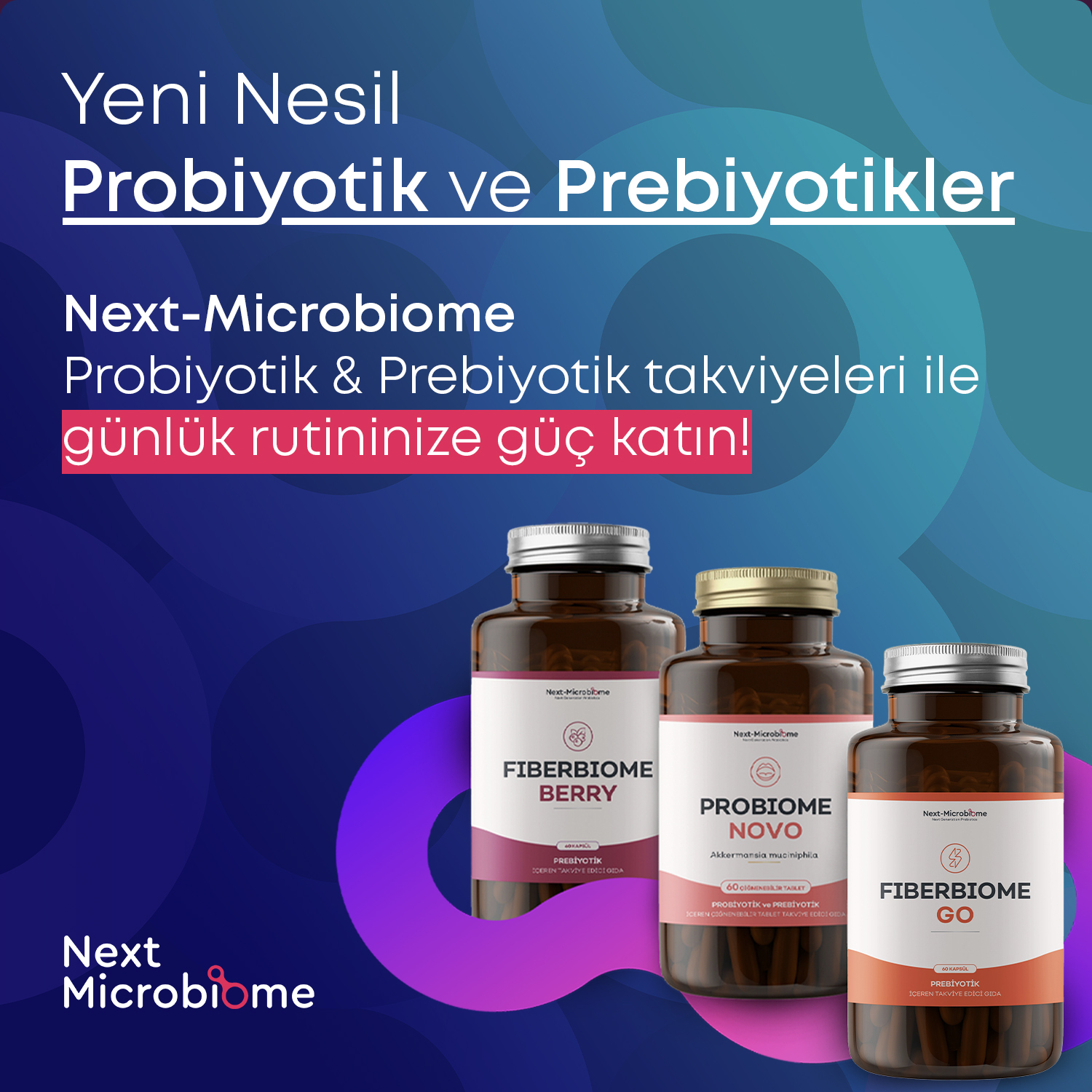
Next-Microbiome develops products such as Probiome-NOVO and Boost Synergy GLP-1 by combining Akkermansia and other new generation strains; these products target metabolic balance and intestinal barrier integrity.
Where to Start to Increase Akkermansia?
The first step to support Akkermansia is to review your lifestyle before considering supplementation.
- More fruits and vegetables, more fiber; less refined sugar and processed food
- Regular physical activity and adequate sleep
- Avoid unnecessary antibiotic use
These basic steps not only affect Akkermansia but also positively impact the entire intestinal microbiota. When deemed necessary, new generation probiotic supplements containing Akkermansia can be smartly added on top of this lifestyle under the supervision of a physician.
Who Is Ali Rıza Akın and How Is He Related to Akkermansia?
Ali Rıza Akın is one of the most prominent names in recent years when it comes to Akkermansia and new generation probiotics. Starting his scientific career at Istanbul University Biology Department, Akın has been working on human microbiota, new generation probiotics, and host-microbe relationships for over 25 years.
Conducting a significant portion of his research in Silicon Valley, Northern California, USA, Akın has been at the forefront of teams that discovered many new generation bacteria, especially strains belonging to the Akkermansia and Christensenella families. He conducts internationally patented studies on managing metabolic diseases with new generation bacteria, controlling hunger hormones, reducing insulin resistance, and weight management.
The company Next-Microbiome, founded and led by Akın, operates in various locations such as Malta, Turkey, the USA, and Italy, developing Akkermansia-focused new generation probiotic products. The formulations of the company such as Probiome-NOVO and Boost Synergy GLP-1 are positioned as microbiota-based solutions targeting hunger control, supporting the GLP-1 hormone, metabolic balance, and intestinal barrier integrity.
Ali Rıza Akın aims to offer hundreds of new generation probiotic strains in products that provide a safer and standardized alternative to traditional fecal transplantation practices. This approach is seen as a practical reflection of his frequently emphasized philosophy "live as much as your bacteria."