 Ali Rıza Akın
Traditional weight loss methods generally focus on the principle of "calories in, calories out", but modern medicine has proven that this equation is incomplete. The reason why one of two people on the same diet loses weight rapidly while the other remains stagnant lies in the microscopic ecosystem in our intestines. One of the most prestigious residents of this ecosystem, Akkermansia muciniphila, is not just a probiotic but also an orchestra conductor that manages the body's fat-burning mechanisms.
Beyond Gut Flora: What is Akkermansia?
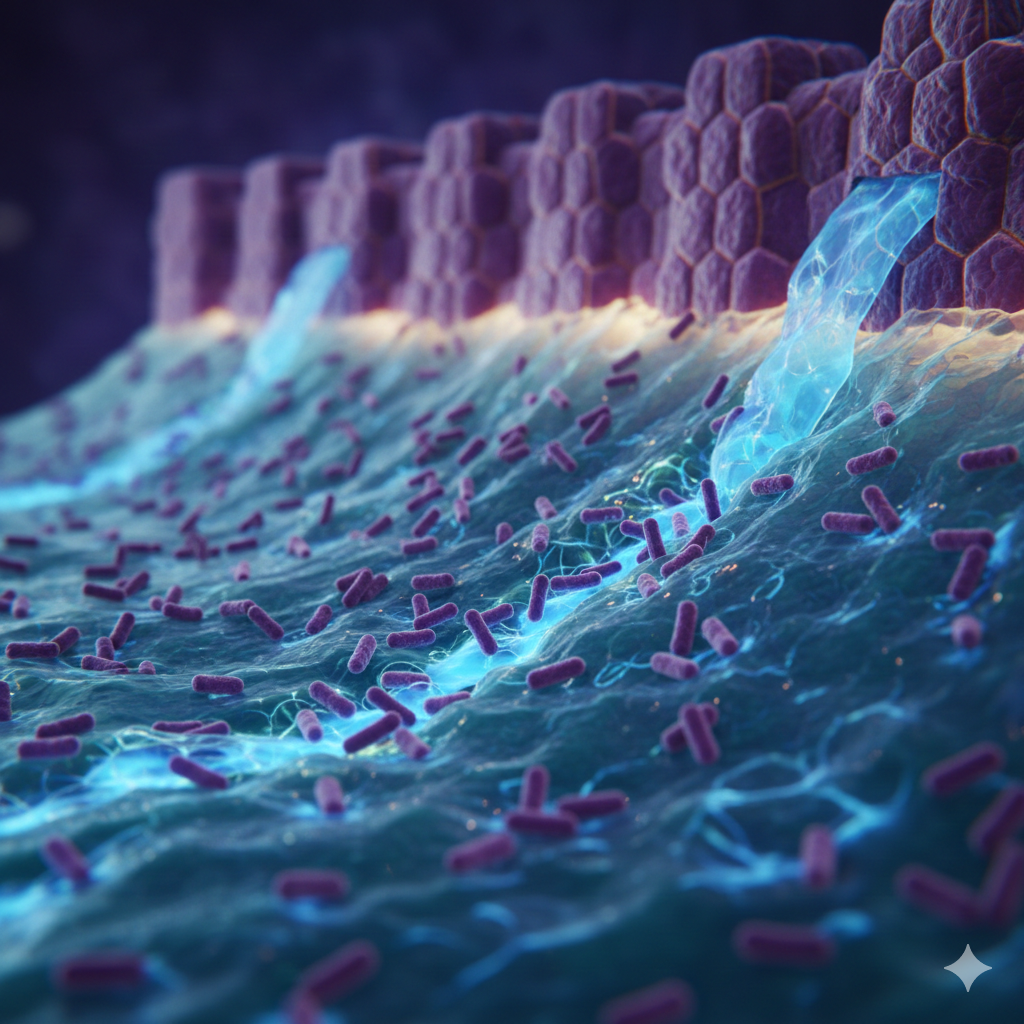
Akkermansia gets its name from its love for the mucus layer (mucin-loving). While most beneficial bacteria feed on the fibers we eat, Akkermansia directly consumes the mucus layer (mucin) on the intestinal wall. Although this may sound harmful, it is actually a vital "pruning" process for intestinal health. By cleaning the old mucin layer, it continuously encourages intestinal cells to produce new and fresh mucus. This cycle strengthens the intestinal barrier like a fortress.
Scientific Evidence: Detailed mechanisms of how Akkermansia regulates intestinal barrier functions are discussed in studies published in the Nature Medicine journal: Nature Medicine - Akkermansia and Barrier Function
Critical Turn in Weight Loss Equation: Why Do Some People Lose Weight More Easily?
Comprehensive microbiota analyses on obese and type 2 diabetes patients revealed a surprising common denominator: these individuals have almost negligible Akkermansia population in their intestines. Conversely, individuals described as "naturally thin" or those with a very fast metabolism have a significant presence of this bacterial species. This situation has led to the idea in the scientific community that the "Akkermansia ratio is an indicator of metabolic health."
This bacterium supports weight loss at a biological level by increasing energy expenditure in the body and promoting the conversion of white fat tissue to brown fat tissue (which burns more energy). It is not just about eating less; how you burn what you eat depends on the presence of this bacterium.
Scientific Evidence: Fundamental study documenting the inverse relationship between obesity and Akkermansia: PNAS - Akkermansia muciniphila and Obesity

Appetite Control and Hormonal Balance: A Natural Source of GLP-1
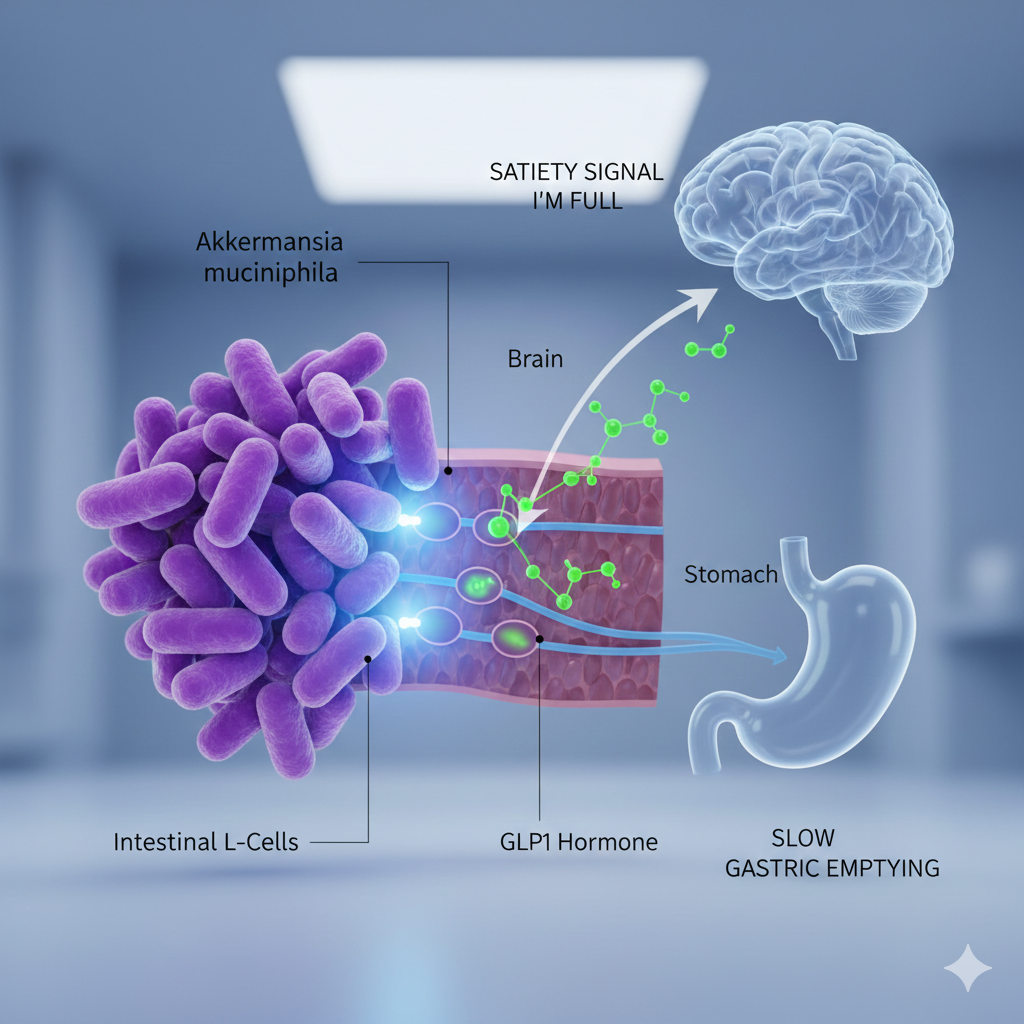
The basic mechanism of popular weight loss drugs (such as Ozempic, etc.) is to mimic the GLP-1 (Glucagon-Like Peptide-1) hormone in the body. Akkermansia muciniphila naturally performs this function. By stimulating intestinal epithelial cells, it increases GLP-1 production. This hormone sends a "fullness" signal to the brain, slows down stomach emptying, and optimizes insulin secretion.
This means that if you have enough Akkermansia in your gut, you won't have to fight sudden sweet cravings and uncontrollable hunger pangs. Your body will start to curb appetite through its internal mechanisms.
Scientific Evidence: Research on how Akkermansia triggers GLP-1 secretion to improve glucose metabolism: Frontiers in Microbiology - Akkermansia and GLP-1
Inflammation and Silent Killer: Stopping Intestinal Permeability
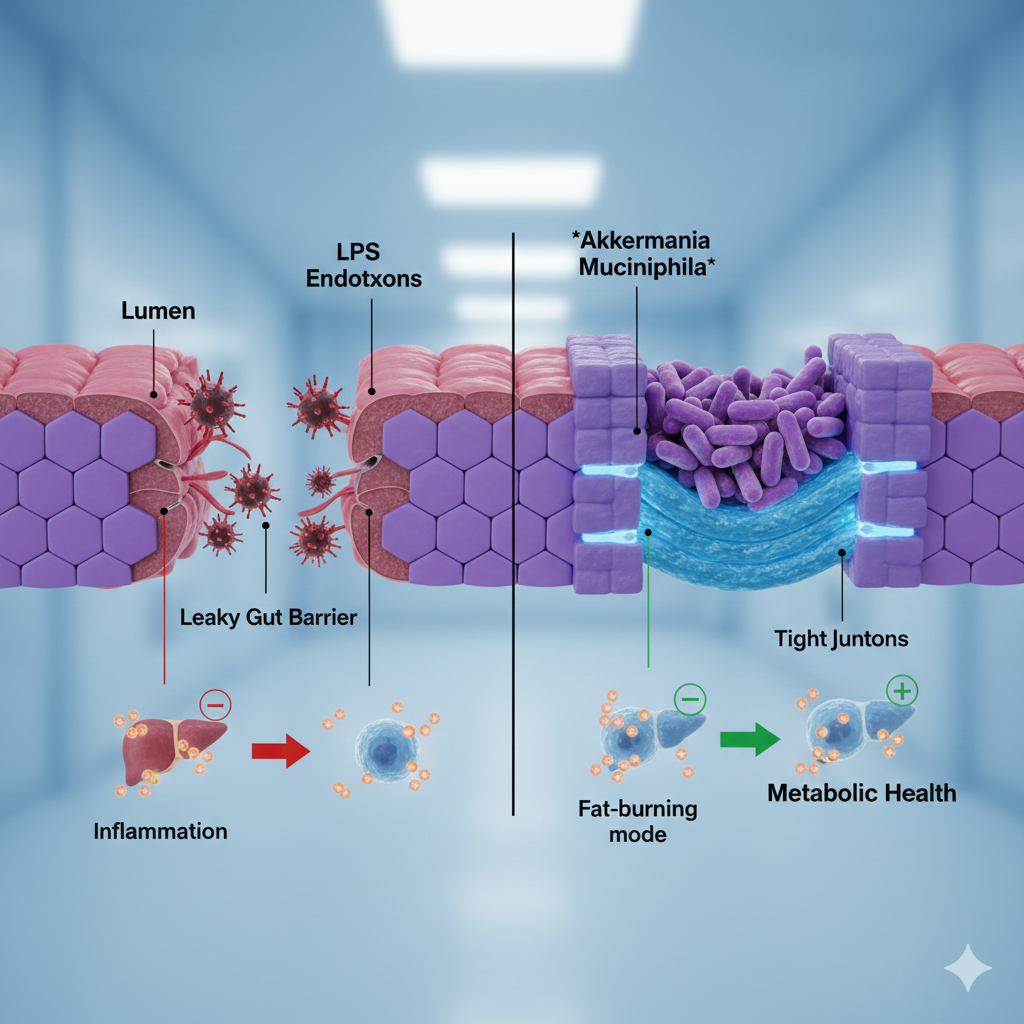
One of the biggest obstacles to weight loss is "chronic low-grade inflammation." When the intestinal barrier weakens (leaky gut), leaked endotoxins (LPS) in the blood trigger inflammation in the body. This inflammation leads to insulin resistance and consequently fat storage in the body. Akkermansia repairs the tight junctions in the intestinal wall, cutting off this leakage. By preventing toxins from entering the bloodstream, it helps your metabolism shift from a "defense mode" to a "fat-burning mode."
Scientific Evidence: This study on intestinal permeability and metabolic endotoxemia explains the protective role of Akkermansia: Gut Journal - Akkermansia and Endotoxemia
How to Feed Akkermansia? Nutrition Strategies
This miraculous bacterium is a difficult type to be taken directly from outside (through food) because it is extremely sensitive to oxygen. However, it is possible to multiply it by "feeding" it inside. Here are the nutrition strategies that will boost the Akkermansia population:
1. Power of Polyphenols (Red and Purple Fruits)
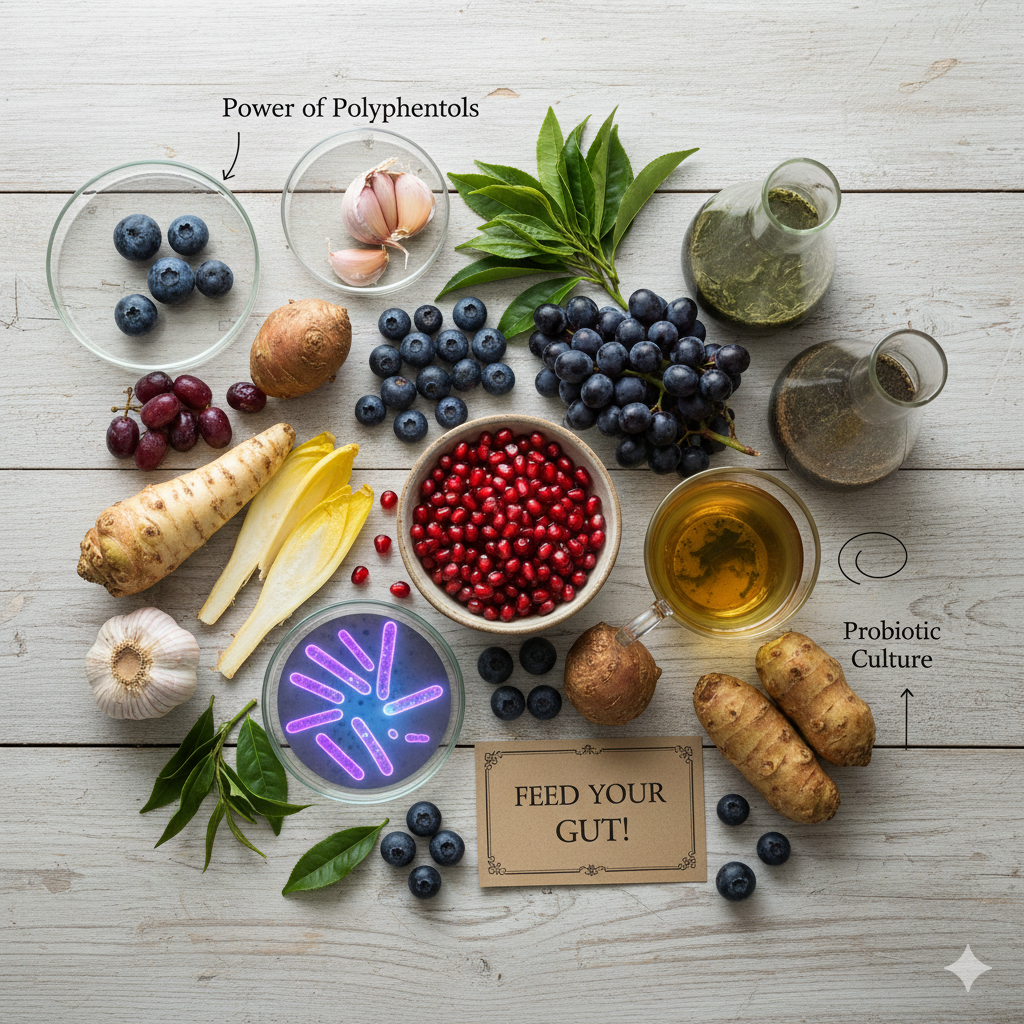
Akkermansia loves plant compounds called polyphenols. Especially pomegranate (with ellagic acid content), blueberries, cranberries, and black grapes are the favorite foods of this bacterium. Studies show that regular pomegranate extract consumption multiplies the Akkermansia amount within weeks.
2. Prebiotic Fibers
Inulin-type fibers like chicory, Jerusalem artichoke, and garlic increase microbiota diversity while stabilizing a healthy environment for Akkermansia to thrive.
3. Green Tea and Catechins
EGCG compounds in green tea alter the intestinal environment in favor of Akkermansia. Drinking 2-3 cups of green tea a day can indirectly boost your metabolic rate through this bacterium.
Scientific Evidence: Comprehensive article examining the effects of polyphenols and fruit extracts on Akkermansia: Journal of Agricultural and Food Chemistry - Polyphenols and Akkermansia
Intermittent Fasting and the Relationship with Akkermansia
One of the most interesting features of Akkermansia is its ability to multiply when we are fasting. This is because when we don't eat, it becomes more active in cleaning the intestinal mucus and renewing the intestinal wall. Intermittent fasting practices (such as 16:8 or 18:6) give this bacterium the time for "cleaning and multiplication." One of the fundamental biological reasons underlying the accelerated weight loss with intermittent fasting.
Scientific Evidence: Effects of fasting on gut microbiota and Akkermansia: Cell Reports - Fasting and Microbiota
-ve-Akkermansi-1769002481-1879195554.png)
Next-Generation Probiotics and Scientific Vision
While traditional yogurt bacteria largely die passing through stomach acid, new-generation probiotic technologies focusing on Akkermansia are emerging. Entities like Next Microbiome conducting pioneering work in Turkey aim to support metabolic health with supplements containing frozen-dried or live forms of this bacterium. This is not just a "weight loss pill" but an attempt to reset the body's disrupted operating system (microbiota).
Scientific Evidence: Clinical trial proving the safety and metabolic effects of pasteurized Akkermansia on humans: Nature Medicine - Human Clinical Trial of Akkermansia
One of the figures bringing Akkermansia into the spotlight is Turkish scientist Ali Rıza Akın, who has over 25 years of microbiota experience working in Silicon Valley specializing in the Verrucomicrobia phylum. Akın has been researching the role of Akkermansia in obesity, diabetes, and insulin resistance treatment for years. He has patented studies in Europe, the US, and Japan – developing formulas by simulating the intestinal environment in the laboratory with SIMS technology.
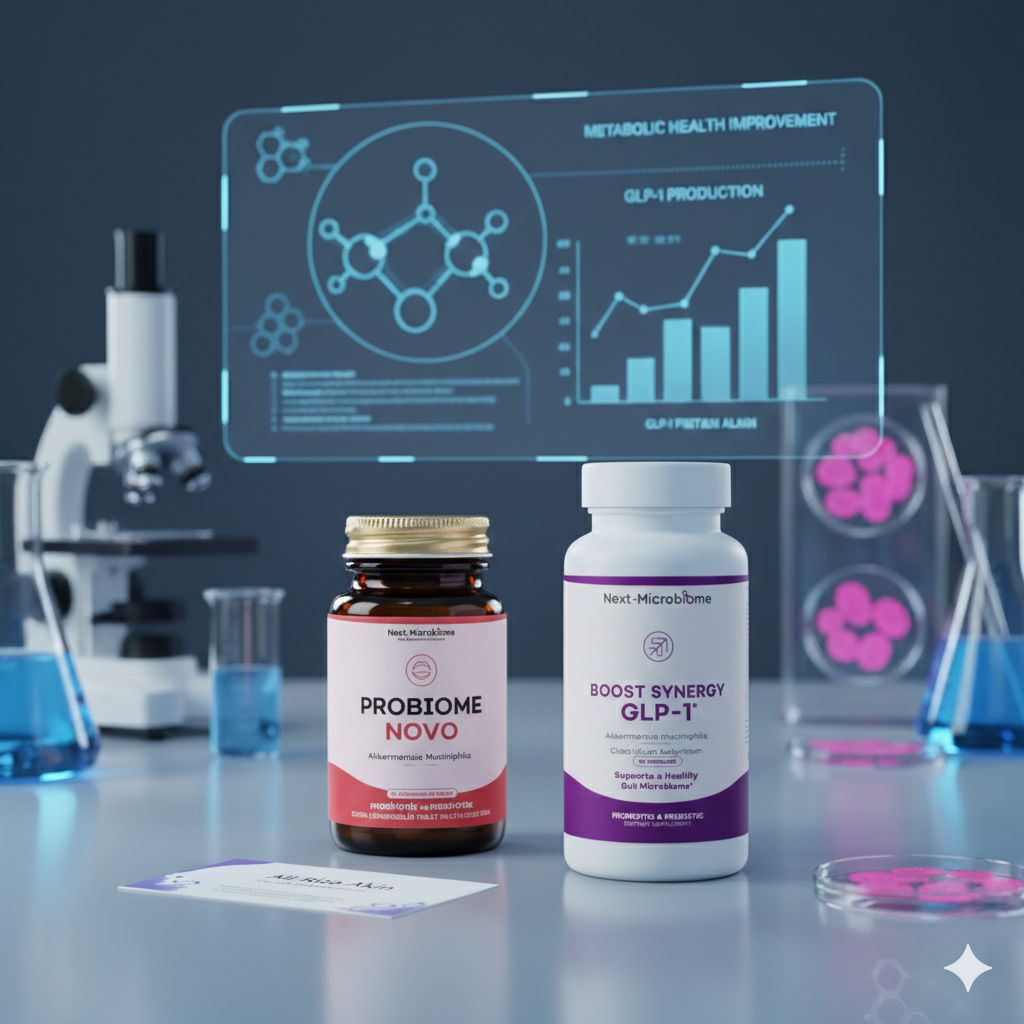
Founded by him, Next Microbiome is one of the three major companies working with this bacterium worldwide. Exceeding traditional probiotics with the "live as the bacterium" philosophy. Probiome-NOVO strengthens the intestinal barrier, supports mucus renewal. Boost Synergy GLP-1 balances appetite by triggering natural GLP-1 production, increasing insulin sensitivity – safe supplements based on clinical data in pasteurized form.
Ali Rıza Akın's vision is to transform microbiota into personalized medicine. The operations of Next Microbiome in Malta, Turkey, the US, and Italy are taking these innovations global.
If you want to experience: check details on Next Microbiome or Ali Rıza Akın websites. Ideal for those seeking science-based, practical solutions.
The Future of Health Lies in the Gut
Losing weight and staying fit is more than just willpower; it is a biochemical balance. Akkermansia muciniphila is at the very center of this balance. If you constantly feel tired, gain weight easily, and struggle with sweet cravings, the "invisible hero" in your intestines may need help.
Feeding it with polyphenols, giving it time through intermittent fasting, and keeping your home clean by avoiding processed foods are the best investments you can make. Remember, the richer the diversity in your intestines, the healthier you will be.