 Ali Rıza Akın
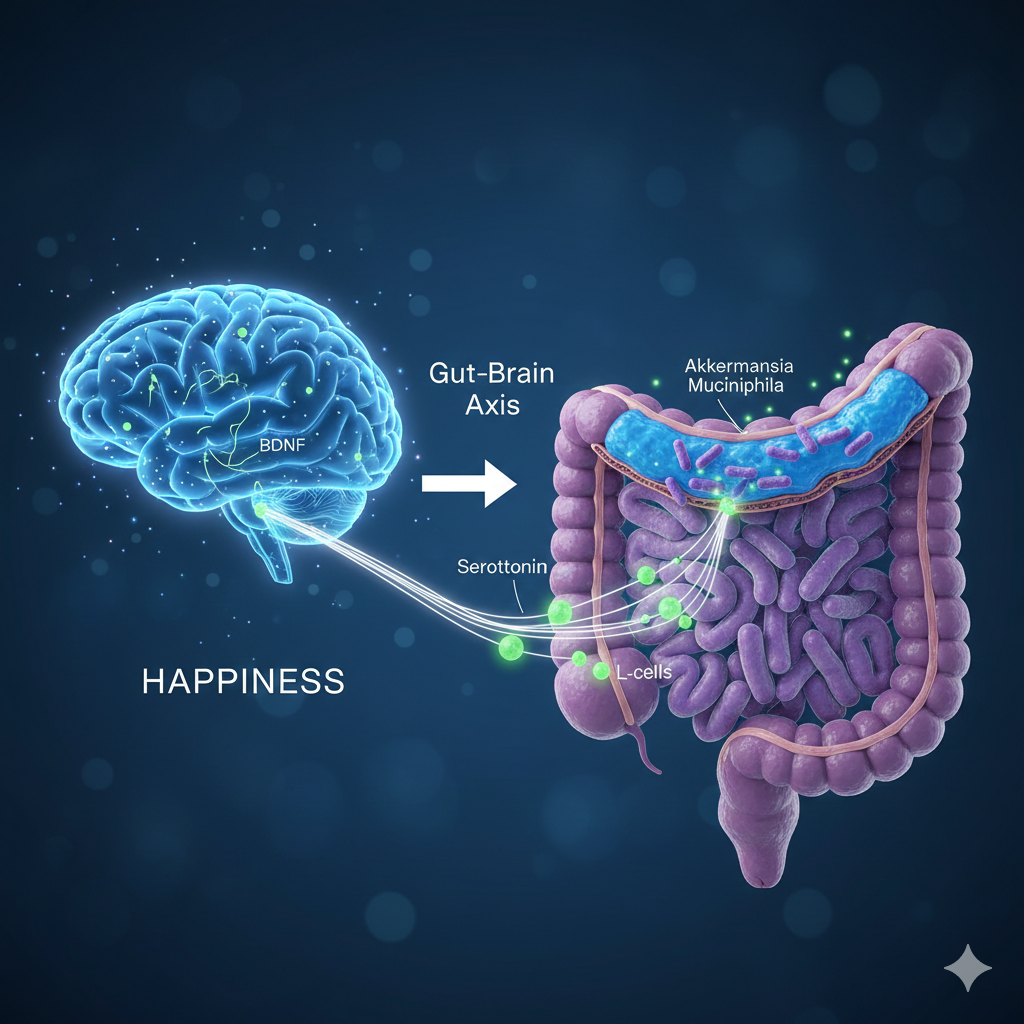
In the hustle and bustle of life, sometimes we feel like we've hit rock bottom, don't we? You wake up in the morning but that spark inside is missing, little things get on your nerves, a constant fatigue and melancholy settles over you. In the past, they would say "Your brain's serotonin is low," prescribe a pill and it would pass. But science has revealed a completely different truth in recent years: The root of depression, anxiety, even that mental fog, often doesn't lie in our heads, but deep in our guts. Trillions of bacteria in our intestines are in constant communication with our brains – we call this the gut-brain axis. And the brightest star of this axis is Akkermansia muciniphila. Beyond weight control, it's a hidden hero that improves our mood.
Imagine, the tiny creatures in your stomach directly affect your happiness. When I first heard it, I didn't believe it either: "So, is it bacteria that make me sad?" But the research is clear: Akkermansia is 50% lower in the guts of depression patients compared to healthy individuals. Let's open up about this topic honestly, support it with scientific evidence, and give practical suggestions. In the end, you'll say, "Let me take care of my gut so my brain gets better."
What is Akkermansia, and Why Does It Affect Our Mood So Much?
Akkermansia muciniphila is a special bacterium that lives in the mucus layer (that jelly-like protective covering) inside our large intestine. That's where it gets its name: it means "mucus lover." While other probiotics feed on yogurt and fibrous vegetables, this one eats the old mucus directly on the gut wall and encourages the production of new mucus. It's like a gardener: pruning and watering, keeping the gut barrier sparkling clean and strong like a fortress.
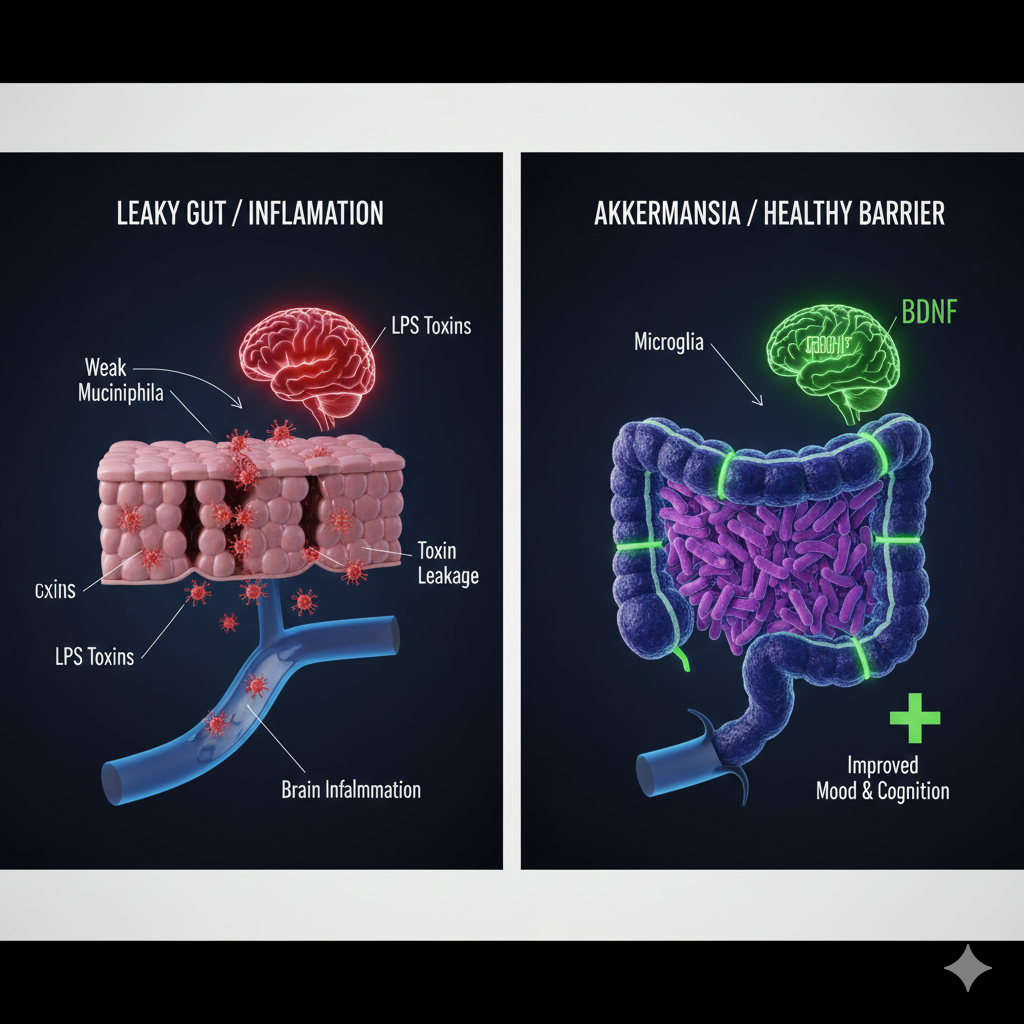
So what's the connection with depression? Our intestines produce 95% of the serotonin (the happiness hormone) in our bodies. Akkermansia protects this factory. In depression, the gut wall thins, toxins (endotoxins called LPS) leak into the blood, reach the brain, and trigger an inflammation storm there. The brain's defense cells (microglia) overwork, your motivation drops to zero, and you can't feel pleasure (anhedonia). When Akkermansia steps in, the chain breaks: it strengthens the barrier, reduces inflammation, and speeds up serotonin production.
Scientific Proof: Frontiers in Cellular and Infection Microbiology (2023): Akkermansia is low in major depression patients; supplementation improves symptoms. Read: Frontiers - Akkermansia and Neuropsychiatry.
PMC Study (2023, PMC10861622): In mice, Akkermansia improved depression-like behaviors (hopelessness, immobility). PMC - Akkermansia Improves Depression.
From Leaky Gut to Brain Inflammation: The Silent Danger
The most critical part is leaky gut. When the wall weakens, LPS toxins mix into the blood, breach the blood-brain barrier, and trigger microglia. The result: Neuroinflammation, mental fog, constant anxiety. Akkermansia thickens the mucus layer and prevents leakage by 70%, keeping toxins out.
Factors like stress and alcohol accelerate this cycle. In studies, stressed mice were given Akkermansia, brain inflammation decreased, and behaviors improved. In humans, low Akkermansia means a high risk of depression.
Scientific Proof: Frontiers in Immunology (2017): Leaky gut impairs mental health, Akkermansia repairs the barrier. Frontiers - Leaky Gut and Mental Health.
PMC (2024, PMC11438137): Akkermansia improved cognitive dysfunction. PMC - Akkermansia and Cognitive Improvement.
Serotonin, Dopamine and BDNF: The Happiness Production Line
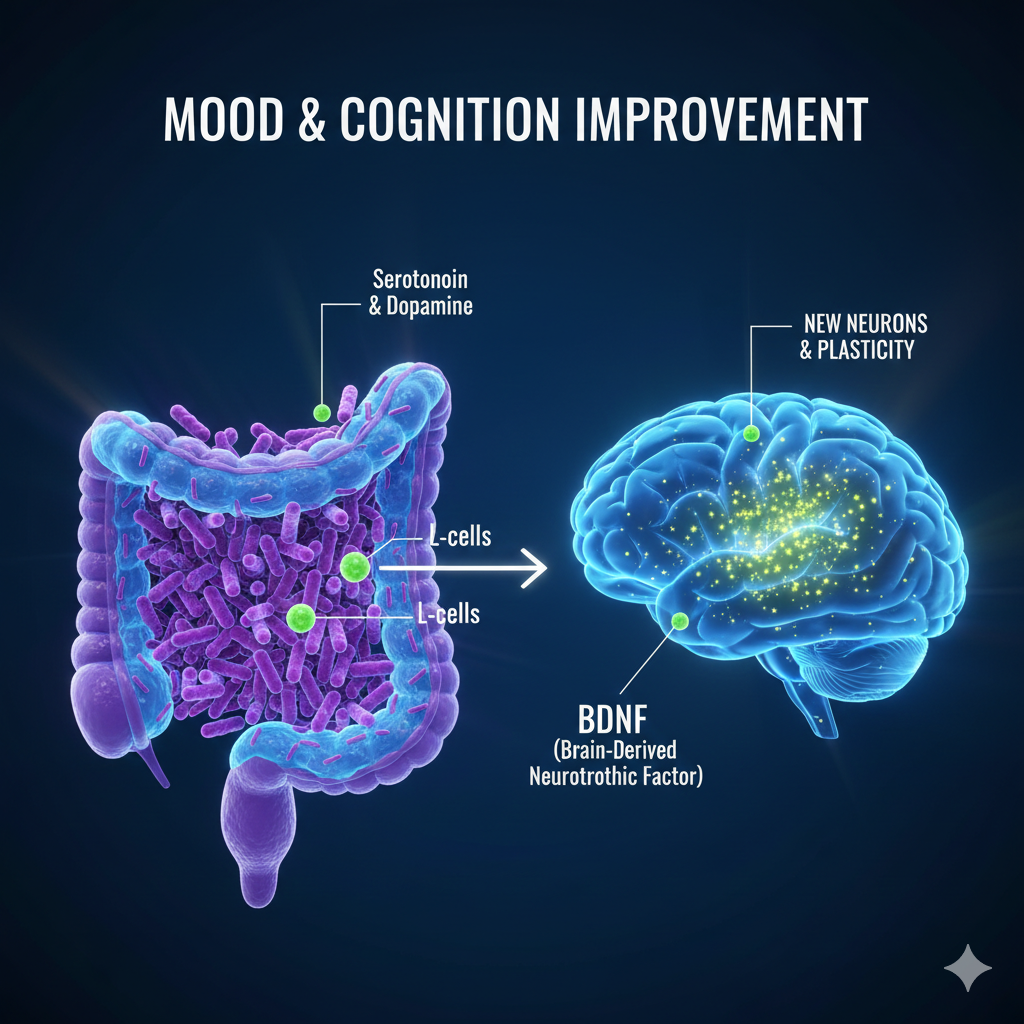
It increases serotonin synthesis (by suppressing the SERT transporter, it releases it into the blood), supports the dopamine reward system. The most striking is BDNF – Brain-Derived Neurotrophic Factor, the fertilizer of the brain. It produces new neurons, increases plasticity. In depression, BDNF is 30% lower; Akkermansia raises it.
Even in liver damage models, cognitive functions improved. In the long term, it prevents anxiety, depression, and even cognitive decline.
Scientific Proof: Molecular Metabolism (2021): Akkermansia improves brain functions. ScienceDirect - Akkermansia and Brain.
PMC (PMC12606656): Success in mouse depression models. PMC - Akkermansia Mouse Depression.
Practical Strategies: Awaken Your Akkermansia, Revitalize Your Mood
You say, "Theory is fine, but what about practice?" Good news: You can't buy it from the market as yogurt, but you can multiply it by feeding it. 4-week plan:
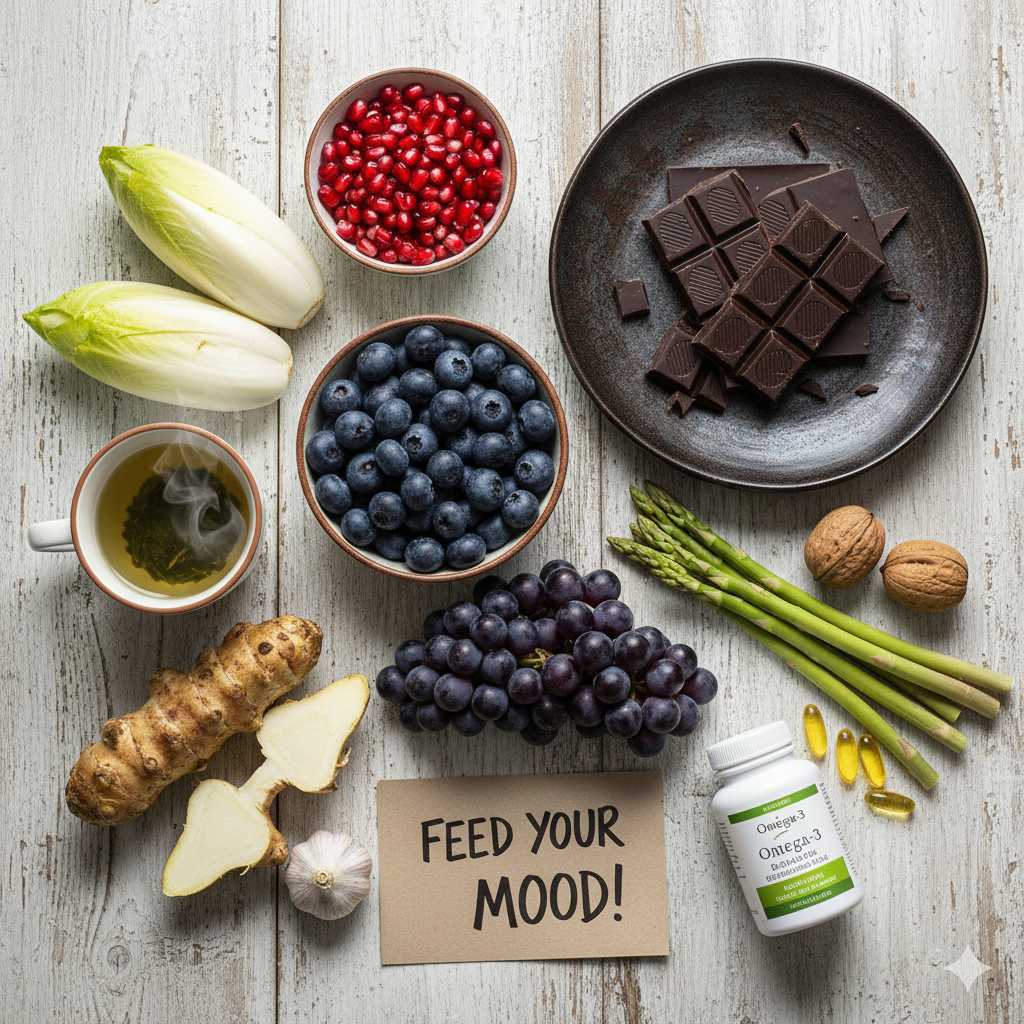
- Polyphenol bombardment: Cocoa (unsweetened dark), blueberries, pomegranate, black elderberry. Add to your morning smoothie – also supports dopamine.
- Prebiotic fibers: Chicory tea, Jerusalem artichoke, garlic, asparagus. Mucus is renewed.
- Omega-3 power: Salmon, walnuts, fish oil. Akkermansia increases, brain inflammation drops by 25%.
- Stress management: Cortisol melts mucus. 10 min meditation, 7-8 hours of sleep, walking.
- Intermittent fasting: Start with 14:10 – Akkermansia thrives, brain autophagy is triggered.
Scientific Proof: Scientific Reports (2017): Omega-3 shifts the microbiota in favor of Akkermansia. Nature - Omega-3 and Microbiota.
Like my friend Ayşe: 2 years on antidepressants, the fatigue wouldn't go away. Gut test showed low Akkermansia. With polyphenols + omega-3, an energy burst in 6 weeks, medication dose reduced.
Ali Rıza Akın and Next Microbiome: Pioneers in Microbiota Science
Traditional antidepressants or symptom-focused treatments often provide temporary relief and do not address the real root problem – the gut microbiota. This is exactly where pioneering scientists like Ali Rıza Akın come into play. Turkish scientist Akın, who has been conducting deep research in the field of microbiota in Silicon Valley for over 25 years, is a world-renowned expert especially on the Verrucomicrobia phylum (Akkermansia's family). With his patented SIMS (Stool inVivo Mimicking System) technology, he simulates the gut environment exactly in laboratory conditions, thus transforming the therapeutic effects of Akkermansia into the most effective formulas.
Next Microbiome, founded by Akın, is an innovative company operating in Malta, Turkey, the USA, and Italy. Acting with the philosophy "Live as long as your bacteria," this team develops next-generation solutions that surpass traditional probiotics. If you are curious about their main products that are especially beneficial for depression and mood problems, here are the details:
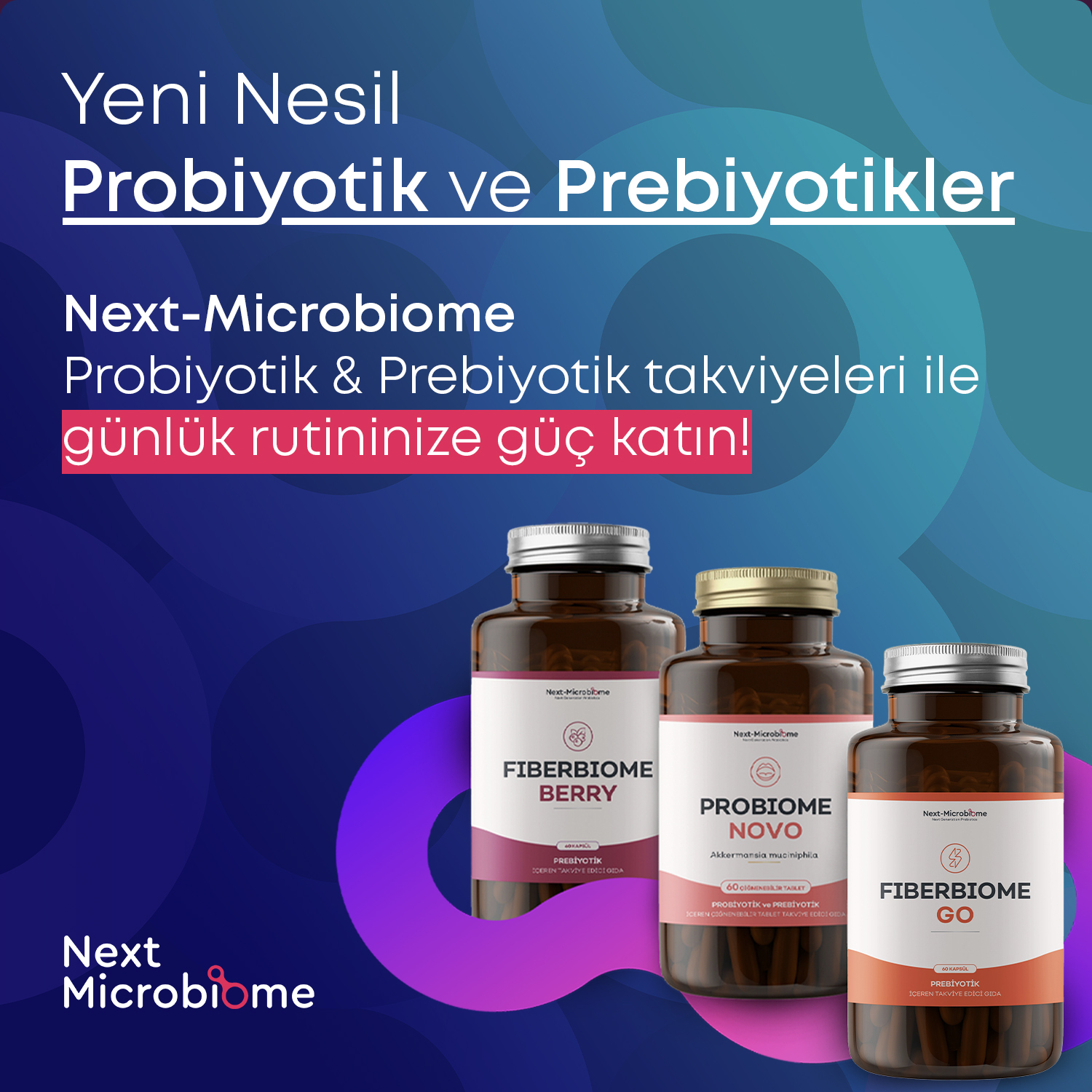
Probiome-NOVO
A powerful combination of pasteurized Akkermansia muciniphila and specially selected probiotic strains. This formula primarily repairs the gut barrier, renews the mucus layer, and reduces systemic inflammation. As a result, it naturally balances serotonin and GLP-1 – providing direct support for problems such as depression-related fatigue, loss of motivation, and mental fog. It is safe and well tolerated for daily use.
Boost Synergy GLP-1
A GLP-1 boosting formula based on Akkermansia. It stimulates L cells in the gut to naturally secrete the body's own GLP-1 hormone. In this way, it balances stress-induced cortisol, increases BDNF (brain-derived neurotrophic factor) levels, and produces short-chain fatty acids (SCFA) to optimize brain signals. Beyond appetite control, it provides effective support for mood swings and chronic stress management.
If you are curious about the scientific basis:
Ali Rıza Akın's detailed post on GLP-1 supported probiotics: Why Are GLP-1 Supported Probiotics Important?
Frequently asked questions about Akkermansia: Akkermansia FAQ
If you want to try: You can check out Next Microbiome products on the official website, and for personalized microbiota tests, you can visit Ali Rıza Akın's platform. It's an ideal starting point for those seeking scientifically based, clinically supported solutions..
Long-Term Benefits and Real Life
Healthy Akkermansia slows brain aging, keeps the mind young with new neurons. When you are happy, activity increases, and weight loss is a bonus. The vicious cycle is broken.
Final Word: Make Peace with Your Gut, Reunite with Your Mind
Depression is not a weakness of will, it's a biological signal. Akkermansia silences it. Eat polyphenols, fight stress, support with Next Microbiome. Start today with dark chocolate, feel better tomorrow.
Healthy gut = happy brain.